Each day, our thoughts quietly shape the life we experience. Well-being and growth are not accidents. What we dwell on does not stay contained in the mind. It becomes chemistry, tone, reaction, and ultimately, direction. When our thinking leans toward anger, comparison, blame, regret or fear, the brain responds by releasing cortisol, preparing us for threat even when no true danger is present. Over time, this pattern narrows our vision, drains our energy, and pulls us into a heavier way of living anxiously in darkness.
Yet this is not a fixed path. The same mind that generates anxiety or stress can also generate renewal. When we become aware of our thoughts, we begin to see a simple but profound truth. Every moment offers a choice. We can continue feeding the stress response, or we can gently redirect toward thoughts that restore and strengthen us.
Cortisol has its place. It helps us respond in moments that require urgency or protection. But when it becomes the background rhythm of our days, it slowly erodes our clarity, weakens our resilience, and dims our capacity for connection. A life led by chronic stress is not just tiring; it reshapes how we see ourselves, others, and adds misery to the future.
The turning point begins with awareness. When we notice ourselves becoming more reactive, more withdrawn, or more consumed by worry than by purposeful action, we are catching cortisol at work. That awareness is not a judgment. It is an invitation. It allows us to pause and choose differently.
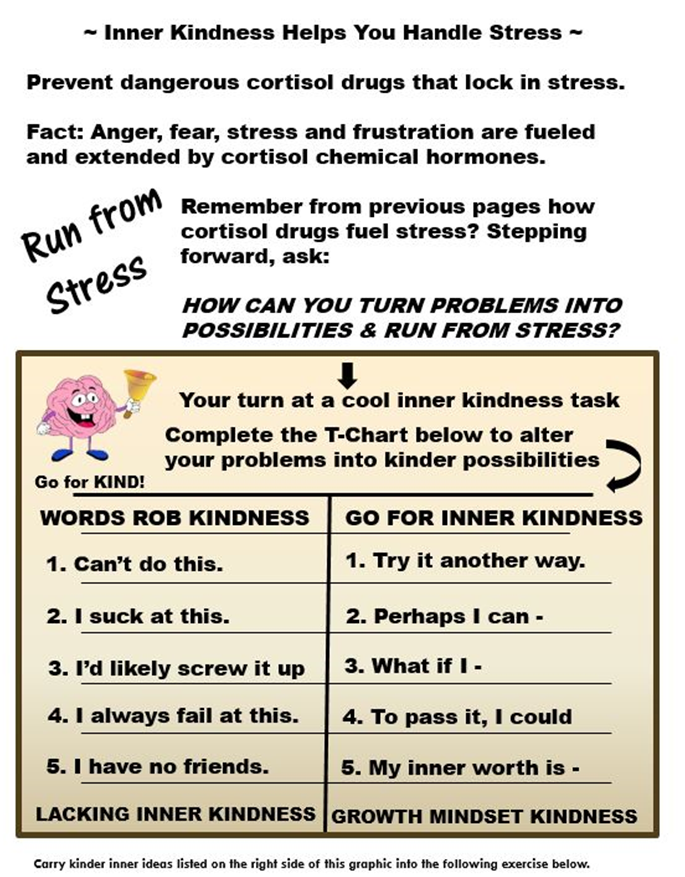
To sidestep stress, or zap anxiety, we do not fight it directly. That is not how to lower cortisol. Instead, we step into its opposite. When the mind begins to circle in rumination, we can gently guide it toward rest through breath, quiet, or even a simple walk that settles the body. When cynicism or irritation rises, we can lean toward connection, seeking out warmth, shared laughter, or a moment of genuine listening. When life feels overwhelming, we can return to focus, choosing one small step forward rather than being paralyzed by the whole.
When we feel stuck, movement, either physical or mental, reawakens energy and breaks the grip of passivity. When anxiety tightens its hold, an act of generosity loosens it, shifting our attention outward and restoring a sense of purpose. When blame tempts us, we can return to our strengths, using what is best within us to build rather than to divide. When problems replay in our minds, we can ask a different question and begin imagining solutions, even small ones, that move us forward.

Our assumptions also shape this inner chemistry. When we assume the worst about others or ourselves, we reinforce stress and separation. But when we begin to see people as carrying unseen struggles and hidden gifts, something softens. When we view conflict as a place to learn rather than to win, tension gives way to understanding. When we see setbacks not as final defeats but as part of a longer story of growth, hope begins to return.
There is also grace in this process. We are not defined by our hardest moments or our most stressful days. The mind can learn new patterns at any stage of life. Each time we choose a calmer, kinder, or more constructive thought, we are gently reshaping the pathways of the brain and the experience of our lives.
Healing unfolds step by step. We begin by noticing what is weighing on us, by naming how it shows up in our body and thoughts, and by choosing, even once, to respond differently. That single shift matters more than it seems. It interrupts the anxiety cycle and opens the door to something kinder and calmer.
As we continue, we find that we are no longer trapped in old loops. We begin to imagine better responses, to feel more at ease in our own minds, and to reconnect with a sense of lightness and possibility. Even choosing not to replay a painful story can begin to quiet cortisol and make space for something more life-giving.
Challenges will always be part of our journey, but the weight we carry from them is shaped by how we think and respond. With each small turn away from stress and toward growth, we release what constricts us and welcome what strengthens us. Over time, these choices create a life that feels steadier, kinder, and more consistently open.
Today offers that choice again. One thought, gently redirected, can begin to change not only this moment, but our wellbeing in the path ahead.